
Getting Your Thermal Data Right in the Fab
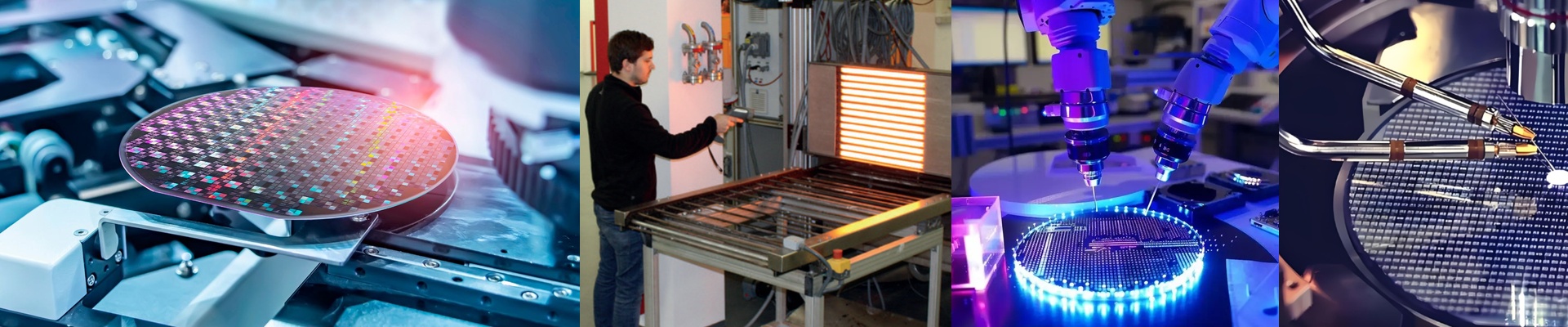
If you’re trying to build a “smart fab,” you’ve probably realized that fancy software isn’t enough. You can’t just buy a dashboard and call it a day. You need hardware that actually talks to your data. When it comes to semiconductor heating, the real headache usually isn’t the heater itself. It’s the feedback loop. That’s why we lean on high-efficiency infrared systems—they react fast enough to actually keep up with a digitized production line.
The struggle with thermal feedback
Keeping a wafer uniform is a balancing act. We use specific thermocouples paired with IR heaters to get the job done. But here’s the thing: a basic temperature reading isn’t enough. We need millisecond latency. If your sensor is sluggish, your PID loop overshoots. Then you’ve got thermal stress on your silicon, and suddenly you’re looking at wasted material. We build our sensors to handle the intense heat of shortwave IR without drifting or getting tired.
Making the data actually useful
The goal is to have a digital mirror of your heating process. We plug these thermocouples into a data-driven setup so you can see your thermal profiles as they happen. No more squinting at analog gauges. Everything becomes a digital signal that goes straight into your PLC. It gives you a clear, honest map of how heat is actually spreading across the substrate.
The trade-offs (and the pitfalls)
High-speed data comes with a catch. The more sensitive your thermocouple is, the more it hates electrical noise from the IR power supplies. It’s a pain. If you don’t use shielded cabling and get your grounding exactly right, EMI will crawl into your signal. And guess what? Your “smart” data becomes nothing but random noise. We designed these systems to be drop-in replacements. You don’t have to rip out your entire heater assembly just to get a digital footprint. It’s just about getting clean, reliable data from the hot zone to the server. Simple as that.