Getting Your Heat Right in Vacuum IR Systems
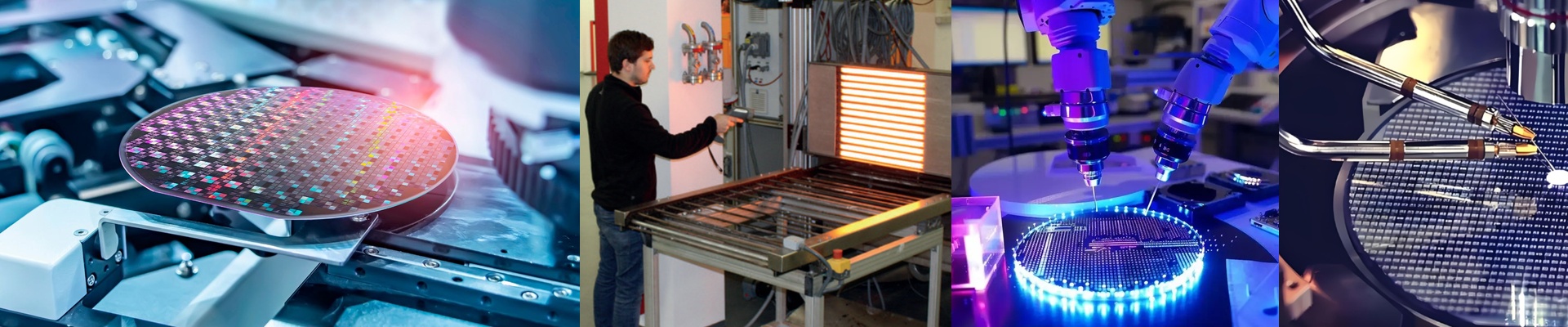
If you’re building a Smart Fab, the last thing you want is a heat source that acts like a “black box.” You can’t just flip a switch and hope for the best. You need a system that actually talks to your PLC and reacts in milliseconds. That’s why we lean on vacuum-compatible IR heaters. Since they move energy through radiation, you don’t have to worry about air or other gases messing up your vacuum chamber. It keeps things clean. Simple.
How the heat actually moves
Here’s the thing: in a vacuum, you can’t move heat through the air. It’s just not possible. To get around this, we use short-wave IR emitters. Think of them as lamps that hit your target directly. If you’re setting up a system for thin-film deposition or wafer processing, you’ll want to focus on power density. High-wattage tubes get you to your target temperature fast. But be careful. You’ve got to make sure your vacuum seals and feedthroughs can handle the thermal expansion, or things will start to leak.
Making it “Smart”
A modern Fab lives and breathes on data. We build these IR systems to play nice with PID controllers and real-time sensors. Instead of guessing what the surface temperature is, just wire up some pyrometers. This creates a closed-loop feedback system that kills the lag you usually get with old-school resistive heaters. Plus, you get a digital record of every single heating cycle. If you’re doing semiconductor or OLED production, that’s the only way to make sure batch #1 looks exactly like batch #100.
The messy reality of the hardware
Now, let’s talk about the trade-offs. High-intensity IR lamps put out a massive amount of heat. That’s great for your throughput, but it’s brutal on your cooling manifolds. If your water loop isn’t beefy enough to handle the peak load, those lamp ends are going to burn out way too soon. It’s a balancing act. You have to weigh your ramp-up speed against how long you want that quartz envelope to last. One tip? Use gold-coated reflectors. They push more energy toward the substrate and keep your chamber walls from getting cooked.