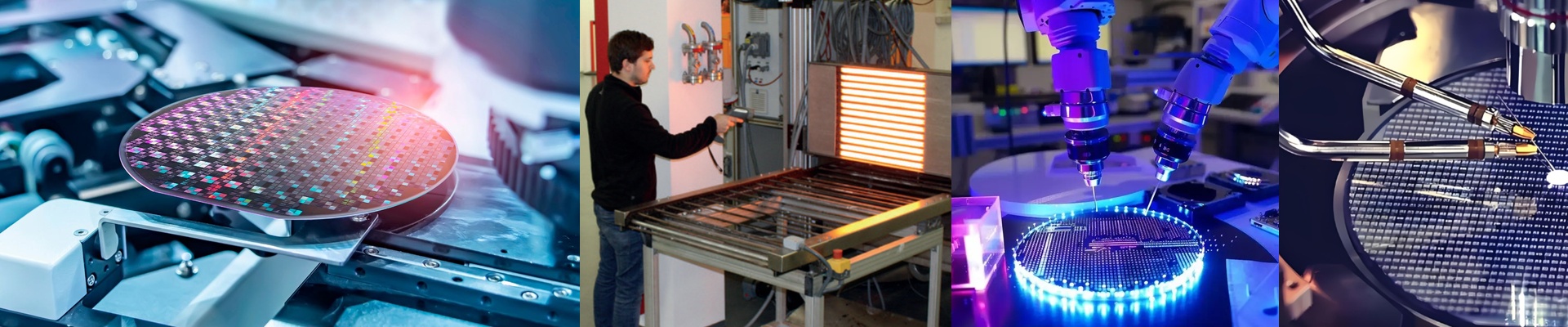
On the lithography floor, a 1°C drift during soft bake or hard bake doesn’t stay theoretical. It shows up as linewidth variation, scumming, and yield bleeding away. Thermal budgets are already tight, and the oven or hotplate simply can’t afford excursions that push the photoresist outside the right glass transition window.
What matters, technically
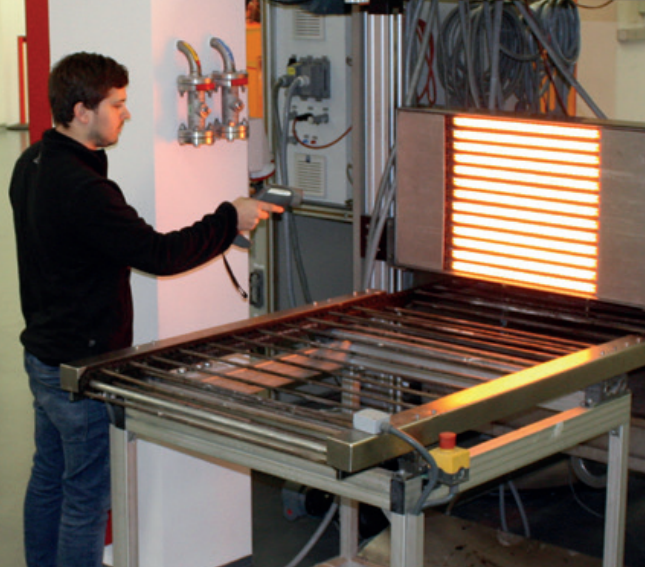
We built the thermal analyzer heating lamp around short-wave infrared (SWIR) halogen emitters in a quartz envelope, tuned to match the absorption profile of common photoresist stacks. Across the bake surface, wafer-level uniformity holds within ±0.1°C, and setpoint repeatability keeps the thermal profile locked to the recipe. It runs in cleanroom classes 1–100 without spiking particle counts, using a low-outgassing assembly and a laminar-flow-compatible housing that meets SEMI S2. Output stays stable over 5,000+ hours, with less than 5% intensity drift, so the same thermal dose lands run after run.
Why it works in real production
In practice, this lamp steadies the bake step between coat and exposure. You get consistent soft-bake solvent removal and hard-bake adhesion promotion, without the overshoot that can reflow or damage the films underneath. Tighter uniformity cuts edge-bead and across-wafer CD bias, which shortens qualification cycles and lowers scrap. The lamp’s fast thermal response reduces idle time between batches, and the efficient SWIR coupling drops energy use per wafer compared with resistive heating. Reliability here is process reliability: fewer bake excursions, fewer alarms, fewer unplanned stops.
The details you need to keep it running
The lamp is sensitive to optical alignment and reflector cleanliness, so installation has to follow the specified tolerances and cleanroom handling steps. After a lamp replacement, expect a brief warm-up and recalibration to keep that ±0.1°C uniformity. It integrates with standard thermal analyzer platforms, but before swapping modules, confirm the connector type, voltage, and your equipment’s thermal budget limits.