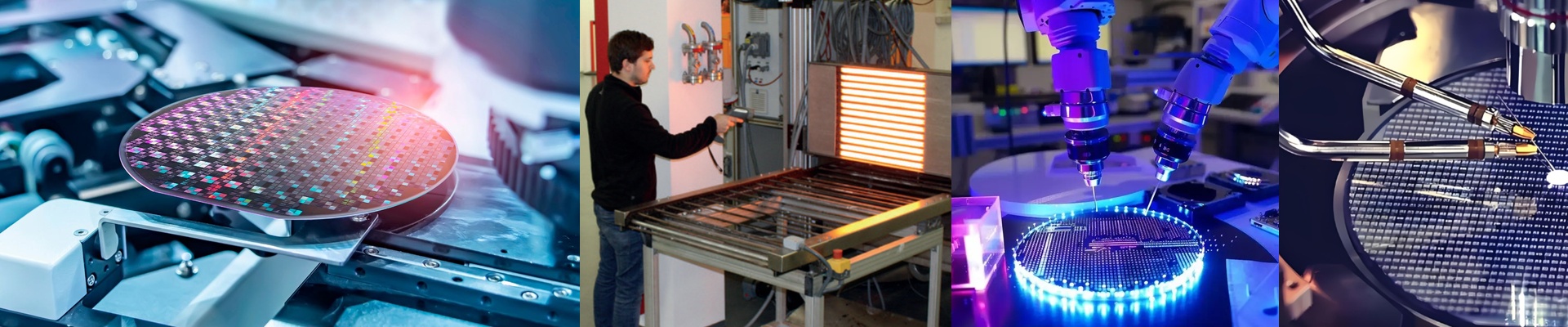
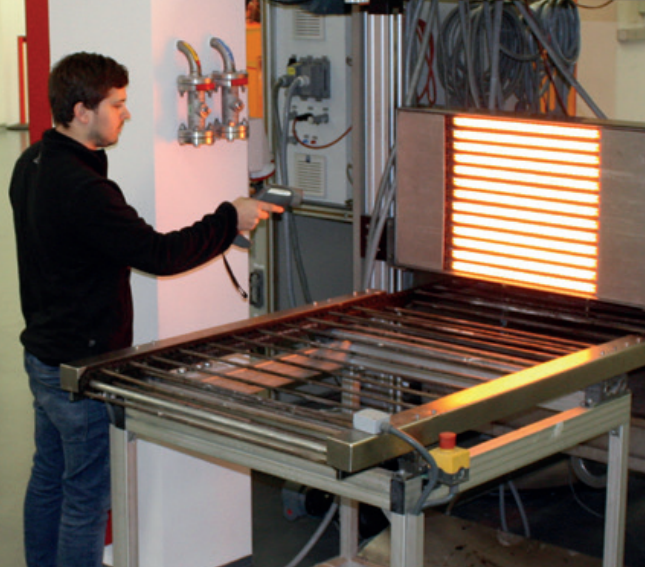
On the fab floor, a half-degree drift in bake temperature can shift a critical dimension by nanometers—and wipe out hours of lithography work. Graphene processing infrared lamps go straight at that problem. They swap out conventional heaters for fast, stable radiant heat that keeps the thermal budget inside the photoresist window. What matters, technically We built the graphene-based NIR emitter for speed and repeatability, so it responds quickly and predictably. You get wafer-level uniformity within ±0.1°C across the bake surface. The system runs in Class 1–100 cleanrooms without generating particles or outgassing, which keeps defect counts down. Output stays stable over 5,000+ hours, with drift under 5%, so every wafer sees the same energy density—batch after batch. After door open/close events, the lamps re-stabilize in seconds, so your soft bake and hard bake profiles stay intact. Why this fits the process In photoresist processing, the bake step sets film stress, sensitivity, and the edge profile. With these lamps, you get tighter control over soft bake and hard bake, which cuts rework and improves CD uniformity across the lot. The fast ramp shortens cycle time without compromising thermal soak accuracy, and the efficiency lowers operating cost per wafer. It’s an international-standard-equivalent replacement that drops straight into existing litho tracks, so you don’t have to requalify the whole line—keep your process qualifications and still push yield. Things to keep straight The lamp output is sensitive to quartz window cleanliness and mounting flatness. Stick to the specified torque and cleanroom wipe procedure if you want to hold that ±0.1°C. The emitter needs a dedicated, low-ripple power supply and a calibrated pyrometer for closed-loop control—plan the interface work upfront. Once it’s aligned, the system runs 24/7 with predictable maintenance intervals, keeping unplanned downtime near zero.