Smart Infrared Heaters: Getting Every Last Watt of Heat onto the Wafer
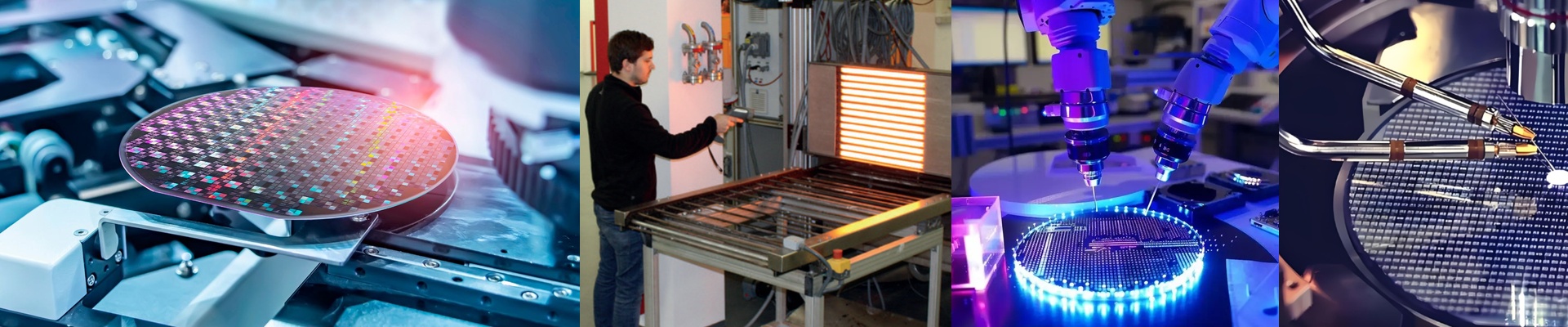
When we design smart infrared heating systems for semiconductor packaging, we keep one thing front and center: getting the absolute most usable heat onto the wafer surface. The big question is simple—how do you turn every watt of input power into real, effective heat? Here’s the answer: our gold-coated reflector technology.
Power, Voltage, and Where the Energy Actually Goes
We built this system to put the heat exactly where you need it—right on the wafer. We pair a high-wattage infrared emitter with a precision gold-coated reflector, and that combo focuses the thermal output so you don’t waste energy on the surroundings. The physics are pretty straightforward: a focused beam hits higher peak temperatures while using less overall energy. But this setup needs a stable voltage supply to keep the filament temperature consistent. When it’s wired correctly, you get heat profiles that are predictable and repeatable, cycle after cycle. And because the reflector geometry is tuned to match the wafer footprint, you get even coverage—no hot spots.
Why Gold? Because It Flat-Out Performs
Gold isn’t a styling choice. It’s a performance decision. A gold coating reflects over 98% of infrared energy in the target wavelength band. That means the reflector absorbs less energy itself and sends more of it straight onto the wafer. In practice, you get faster ramp-up and tighter temperature control. And that gold layer holds up under high heat. It resists oxidation and degradation, so you get stable output over thousands of cycles. We match the reflector to the emitter so the whole thing works as one solid thermal unit—no guesswork, just dependable performance.
What It Feels Like on the Line (And the One Trade-Off)
In wafer processing, time is money. Our gold-coated reflector system cuts cycle time by delivering heat that’s fast and controlled. It works easily with smart sensor feedback for closed-loop control, so the process stays within spec. Installation? Straightforward. It’s a drop-in replacement for standard infrared fixtures. The trade-off is thermal management. High heat density means you need proper cooling. Your machine has to be set up to handle the rise in ambient temperature. Size the heatsink and airflow correctly, and the system runs reliably. Get that wrong, and you’ll shorten component life. Plan for the heat, and you’re good to go.