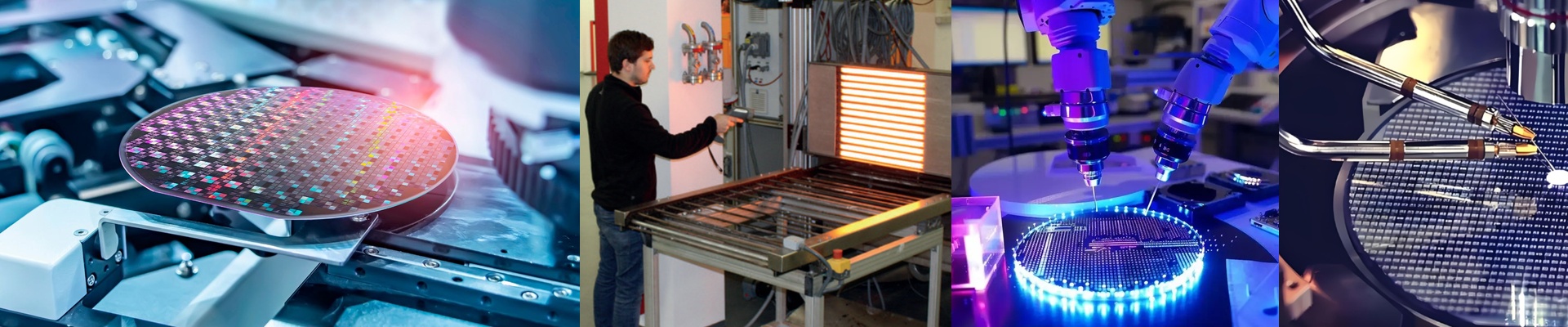
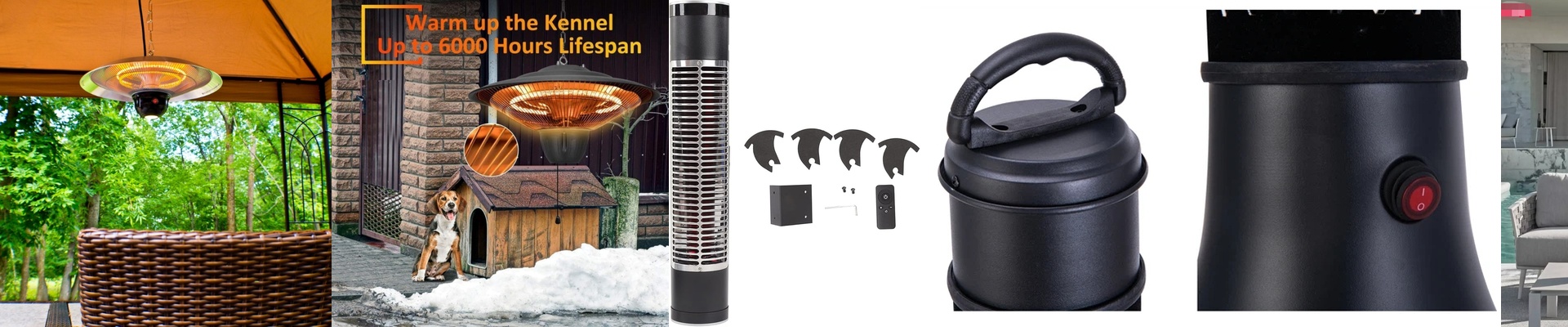
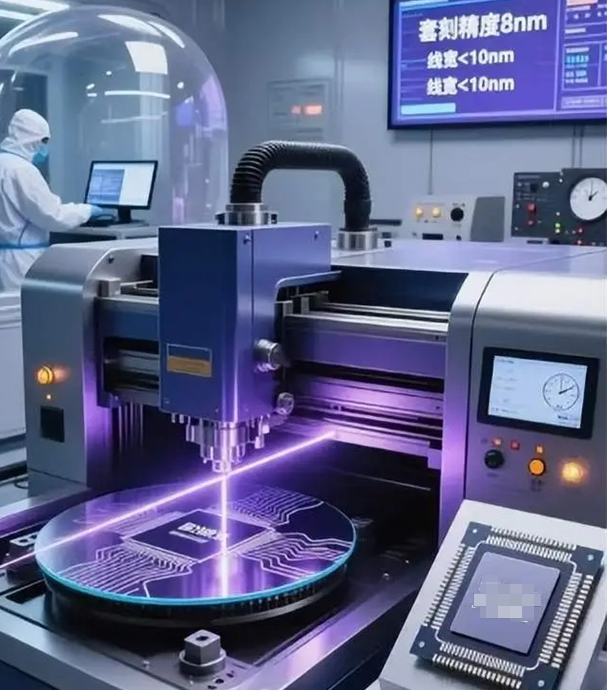
Out on the line, the wafer sits waiting for bake just like your schedule does—both of you counting on things holding steady. One temperature excursion, one hot spot across the resist, and your critical linewidth starts to drift. In organic semiconductor work, the thermal budget is tight, and the margin for error is thinner than the film you’re patterning. The drying lamp can’t just be hot; it has to be precise, clean, and repeatable. We built this organic semiconductor drying lamp for what actually happens in the fab: Class 1–100 cleanroom duty, 24/7 uptime, and photoresist processing windows that demand temperature uniformity measured in tenths of a degree. When the bake profile wanders, you see it in residue, in poor adhesion, in yield that disappears. This lamp is engineered to keep the thermal signature stable, shift after shift.
What actually matters on the technical side
Wafer-level thermal uniformity, ±0.1°C. The lamp delivers controlled infrared energy with uniformity that holds to ±0.1°C across the substrate. That isn’t a talking point—it’s the boundary that keeps linewidth and sidewall angle in spec during soft bake and hard bake. Tight uniformity cuts down reflective notching and reduces standing-wave effects in the photoresist stack. Zero particle generation under Class 1–100 conditions. Housing and lamp body are designed to avoid outgassing and flaking. Filament supports, reflectors, and quartz components are chosen and finished to prevent particulate shedding. In practice, particle counts stay within cleanroom limits, so you’re not burning cycle time chasing contamination born in the bake module. Photoresist bake precision with repeatable profiles. Whether you’re running a soft bake to set the solvent profile or a hard bake to harden the resist for etch or lift-off, the lamp delivers repeatable temperature profiles. The control algorithm holds setpoint stability under load changes, so the same resist gets the same thermal history lot after lot. Repeatability is what turns a process into a predictable unit operation. 24/7 reliability, designed for uptime. This lamp is rated for continuous operation in production tools, with materials and thermal design chosen to manage hot spots and stress. We’ve got units running 5,000+ hours with less than 5% output drop. When the lamp behaves predictably, the tool stays in state, and unplanned downtime drops. Fast thermal response, low thermal mass. Infrared energy is delivered with low thermal inertia, so the lamp tracks setpoint changes quickly. That matters when you’re running mixed recipes on the same tool, switching between films and bake temperatures. The bake step hits setpoint fast, and the cool-down window is shorter—compressing cycle time without giving up profile control. Clean, stable output for consistent film quality. The spectral output is managed to avoid unwanted absorption peaks that can cause uneven curing or unwanted reactions in organic films. The result is a stable, repeatable drying curve that treats every wafer the same, even when ambient conditions drift a bit.
Why this works where you need it
In organic semiconductor processing, the drying lamp sits right at the crossroads of lithography, photoresist, and thin-film integrity. You know the flow: wafers move from coat to bake, bake to develop, then into etch or transfer. If the soft bake underperforms, solvent stays trapped and the develop step leaves scum. If the hard bake is inconsistent, the resist edge rolls, and lift-off turns into a gamble. This lamp addresses the failure modes you see on the floor.
- Thermal non-uniformityshows up as thickness variation across the wafer. With ±0.1°C uniformity, the film dries evenly, and the critical dimension distribution tightens.
- Particle generationbecomes yield loss. The lamp is built to live in Class 1–100 environments, so particle excursions from the bake module aren’t the reason you scrap lots.
- Unplanned downtimekills throughput. The reliability design keeps the tool running, and the lamp’s predictable aging means you schedule maintenance instead of reacting to it.
- Recipe variabilitybogs the line down. Fast thermal response shortens the bake step and cuts the time spent stabilizing the module between products. And the gains show up where it counts.
- **Better yield:**Tighter thermal control reduces linewidth excursions and resist defects, improving first-pass yield.
- **Stable process window:**Repeatable bake profiles widen the margin for film thickness and exposure latitude, so the process is less sensitive to upstream variation.
- **Lower operating cost:**Predictable lamp life and stable output reduce spare parts inventory and rework. Energy use is managed without compromising profile control.
- **Faster changeovers:**Rapid setpoint tracking means less time stabilizing the module when switching recipes, so equipment utilization goes up. This isn’t about chasing one metric in isolation. It’s about making the bake step behave like a controlled process—not a variable you manage with operator skill.
What you need to know up front
Installation and integration aren’t plug-and-play on every platform. The lamp has to be integrated into the bake module with real attention to airflow, thermal mass, and sensor placement. Uniformity performance depends on chamber geometry and how the wafer is supported. Plan the mechanical interface and confirm the thermal path matches the design. Thermal coupling matters. Mount the lamp too far from the wafer, and you lose responsiveness. Too close, and you risk local hot spots. The sweet spot is defined by the tool’s chamber design and the wafer position. Expect a commissioning step to finalize the mounting distance and confirm the uniformity map across the substrate. Lamp output drifts with age—and that’s normal. Even with stable materials, the lamp output will drift over time. Set calibration intervals and use process monitors to track the drift. The good news is the drift is predictable, so you can work it into the maintenance schedule. Cleanroom handling is non-negotiable. The lamp is built for cleanroom use, but it still needs clean handling. Wipe-down procedures and ESD controls apply. Even a small amount of contamination on the lamp or housing can become a particle source under thermal cycling. Power and cooling have to match the duty cycle. The lamp runs hot, and the module has to move that heat reliably. Confirm the tool’s cooling capacity is matched to continuous operation. If cooling is marginal, the lamp will still function, but the thermal control loop will work harder—and uniformity will suffer. If you’re running organic semiconductor lines, the drying step isn’t optional. It’s the hinge that swings yield and throughput. This lamp keeps that hinge moving predictably, shift after shift—with cleanroom discipline and thermal control you can measure.